
When the energy of youth meets an awareness of identity, and aspirations are guided by the compass of values and responsibility, the foundations of more conscious leadership begin to take shape—leadership that is more aware of its people, society, and future. From this perspective, the Ministry of Education and Higher Education is participating in the “Leadership 2026” Conference, organized by Qatar Foundation on September 25 and 26 at the Education City Student Center, “Multaqa,” through a dedicated pavilion and an interactive youth workshop.
The conference, which targets young people aged 17 to 24 from across Qatar, brings together promising youth in a two-day space for knowledge and dialogue. It features keynote sessions, workshops, and open discussions, as well as opportunities to connect with leading scholars, thought leaders, and influential figures. Its program is built around two complementary themes: building a strong Islamic identity and exploring leadership based on knowledge and Prophetic values, providing young people with broader perspectives to understand themselves, recognize their roles, and anticipate their responsibilities in shaping the future.
The Ministry is participating in this youth-focused event through a pavilion showcasing some of its initiatives and programs dedicated to youth and students, particularly Athar Platform and the Bunyan Student Center. These initiatives provide spaces and programs focused on capacity building, skills development, encouraging community participation, and transforming young people’s potential into lasting impact within their communities and society.
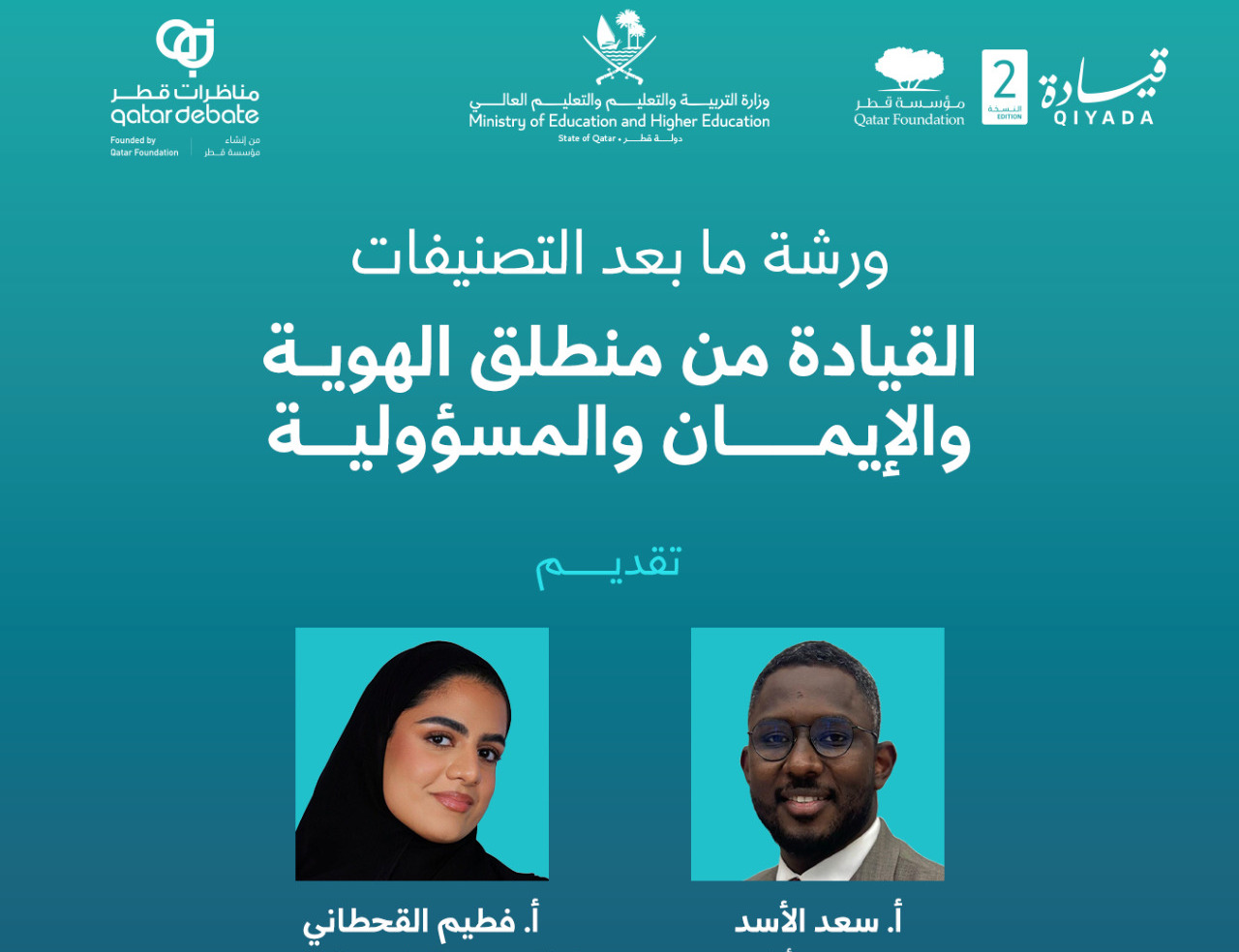
At the heart of this participation, the Ministry, in collaboration with QatarDebate, is organizing an interactive workshop in Arabic titled “Beyond Labels: Leadership through Identity, Faith, and Responsibility.” The workshop moves the concept of leadership beyond abstract definitions into a space of experience, reflection, and dialogue. It explores how identity, faith, and belonging interact with decision-making and taking responsibility.
The workshop is based on open dialogue, small-group activities, and the analysis of leadership situations and dilemmas drawn from the experiences of Muslim youth from diverse cultural and social backgrounds. This enables participants to reflect on the impact of values on their choices, discuss their experiences and perspectives, and explore areas of agreement and difference, ultimately developing practical principles for leadership that embraces diversity, is grounded in awareness, and is built on responsibility.
This participation builds on the youth-focused cooperation between the Ministry of Education and Higher Education and QatarDebate, following the youth workshops held by both sides in Sarajevo last July. It reaffirms the importance of dialogue as a bridge that connects young people with their identity, opens wider perspectives for understanding others, and provides them with more mature tools to engage with the issues affecting their communities and the world around them.


